

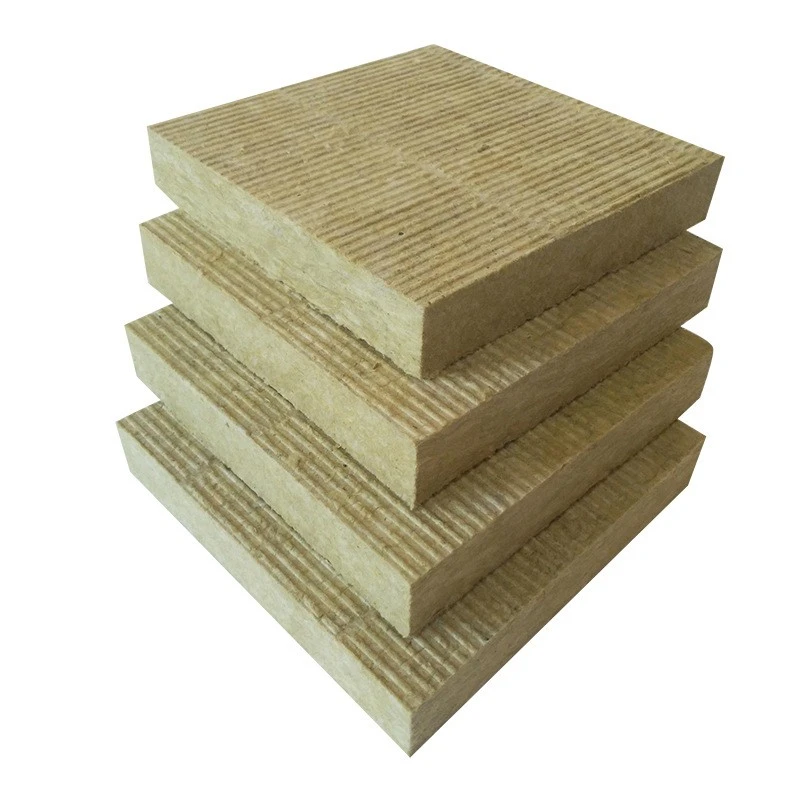
High Density Duct Sound Lining Mat
High density duct sound lining mat is an engineered acoustic and thermal lining material designed specifically for internal installation in HVAC and ventilation ductwork. Installed on the interior walls of designated duct sections, it absorbs airborne sound generated by fans, high-velocity air movement, and connected mechanical equipment.
Key Value Highlights for Procurement & Project Managers
Optimized Acoustic Attenuation: Engineered to target fan and airflow noise frequencies, verified under international reverberation room standards.
Fire Safety & Code Compliance: Manufactured to meet global building fire classifications (such as ASTM, EN, BS, and UL standards) without unsafe flammability claims.
Erosion Resistance & Air Quality: Specialized facings prevent fiber shedding into the airflow stream under high air velocities, preserving Indoor Air Quality (IAQ).
Labor & Waste Reduction: Available in standard rolls, rigid sheets, or factory cut-to-size formats to minimize on-site cutting labor and material wastage.
Technical Specifications
|
Parameter |
Specification / Options |
Applicable Standards / Conditions |
|
Product Name |
High Density Duct Sound Lining Mat |
- |
|
Primary Application |
Internal HVAC Duct Acoustic & Thermal Lining |
- |
|
Material Base |
Glass Wool / NBR Rubber Foam / Melamine Foam / Polyurethane Foam [Specify Actual Material] |
- |
|
Density |
Custom (e.g., 32 kg/m³ to 96 kg/m³) [Specify Actual Value] |
ISO 845 / ASTM D1622 |
|
Thickness |
12 mm, 15 mm, 25 mm, 50 mm [Specify Actual Value] |
ISO 1923 / ASTM C167 |
|
Width |
1200 mm / 1500 mm / Custom [Specify Actual Value] |
- |
|
Length |
Roll format (10m to 30m) / Sheet format / Cut-to-size |
- |
|
Sound Absorption (NRC) |
0.60 to 0.95 (depending on thickness & frequency band) |
ISO 354 / ASTM C423 |
|
Thermal Conductivity (Lambda) |
0.032 to 0.040 W/m.K at 24°C |
ISO 8301 / ASTM C518 / EN 12667 |
|
Operating Temperature |
-40°C to +105°C (depending on material matrix) |
- |
|
Max Air Velocity Resistance |
Up to 25 m/s (4,900 fpm) with erosion-resistant facing |
ASTM C1071 / UL 181 |
|
Fire Classification |
Class 0 (BS 476 Part 6/7) / Class B-s1,d0 (EN 13501-1) / Class 1 (UL 94) / ASTM E84 Class A |
ASTM E84 / EN 13501-1 / BS 476 / UL 94 |
|
Facing Options |
Black Glass Tissue (BGT) / Reinforced Aluminum Foil (FSK) / Perforated PE Protective Film |
- |
|
Moisture & Mold Resistance |
Zero fungal growth / Low water vapor sorption |
ASTM C1338 / ASTM G21 |
|
Installation Method |
Mechanical fasteners (pins/washers) + Water-based HVAC duct adhesive |
- |
|
Product Format |
Continuous Roll / Rigid Sheet / Factory Cut-to-size |
- |
Selection & Configuration Guide
Define the Acoustic Requirement: Identify primary noise frequencies (e.g., low-frequency fan rumble vs. high-frequency air hiss) and match against tested sound absorption coefficients.
Select Thickness: Balance required NRC performance against available internal duct cross-sectional area, pressure drop calculations, and clearance.
Confirm Density: Evaluate density in combination with fiber matrix design and target acoustic ratings. Higher density does not inherently mean better acoustic absorption at all frequencies.
Verify Fire & Smoke Codes: Confirm local building authority regulations (e.g., NFPA 90A/90B, EN standards, or local civil defense approvals).
Select Facing Option:
Black Glass Tissue (BGT): Standard choice for high sound absorption and erosion protection against airflow velocities up to 25 m/s.
Aluminum Foil (FSK/Alu): Chosen when vapor barrier properties and wash-down capabilities are required.
Perforated Film: Protects against particulate ingress while maintaining acoustic open area.
Confirm Dimensions & Delivery Format: Choose standard rolls, pre-cut sheets, or custom cut-to-size formats matched to specific duct fitting schedules to optimize fabrication efficiency on-site.
Quality Control & Factory Traceability
Raw Material Control: Spectroscopic and physical checks on raw polymers, fibers, resins, and adhesives.
Density & Thickness Monitoring: Continuous inline gauge inspection to maintain tight dimensional tolerances during mat forming and curing.
Facing Integrity Check: Delamination testing and visual inspection for surface flatness, wrinkles, or voids.
Batch Traceability: Every roll/pallet is stamped with batch production codes linked to raw material lot numbers and lab test records.
Customization & Bulk Supply
We support global MEP contractors, HVAC system integrators, duct manufacturers, and regional distributors with containerized bulk shipments and scheduled project deliveries.
Customization Capabilities
Custom densities, thicknesses, and roll/sheet dimensions.
Factory cut-to-size pieces matching job-site duct cut-sheets.
Specialized facings (anti-microbial, hydrophobic, or heavy-duty woven facings).
Private-label packaging and custom palletizing.
RFQ Checklist for Quotations
To receive an accurate technical quotation, please provide:
Product Base Material Preference (Glass Wool / NBR Foam / Melamine / Other)
Required Density and Thickness (e.g., 48 kg/m³, 25 mm)
Dimensions and Total Quantity (Roll/sheet size, total m² or sq.ft.)
Facing Requirement (Black Glass Tissue, Aluminum Foil, Unfaced, etc.)
Target Fire Rating & Acoustic Performance (ASTM E84, BS 476, NRC target)
Destination Country and Port
FAQ
Q: What is High Density Duct Sound Lining Mat used for?
A: It is installed on the inner surface of HVAC ductwork to absorb fan noise, air velocity turbulence, and mechanical equipment noise while providing thermal insulation.
Q: Does higher density always result in better sound absorption?
A: Not necessarily. Acoustic absorption depends on the interaction between acoustic frequency, material open-cell or fiber structure, thickness, and density. Selection should be based on measured acoustic test data (NRC or frequency absorption coefficients) rather than density alone.
Q: How do facings affect acoustic absorption and indoor air quality?
A: Acoustically transparent facings like Black Glass Tissue (BGT) allow sound waves to pass into the core lining for absorption while preventing fiber erosion into the moving air stream, preserving indoor air quality (IAQ) under air speeds up to 25 m/s.
Q: Can the sound lining mat be pre-cut to fit specific duct dimensions?
A: Yes. In addition to standard rolls and sheets, we offer factory cut-to-size options based on project duct fitting schedules, significantly reducing job-site cutting labor, material waste, and installation time.
Q: What fire standards does this duct lining satisfy?
A: Configurations can be supplied to meet major international building standards, including ASTM E84 Class A, BS 476 Part 6/7 Class 0, EN 13501-1 Class B-s1,d0, and UL standards. Third-party test reports are provided with technical submittals.
Hot Tags: high density duct sound lining mat, China high density duct sound lining mat manufacturers, suppliers, factory


