

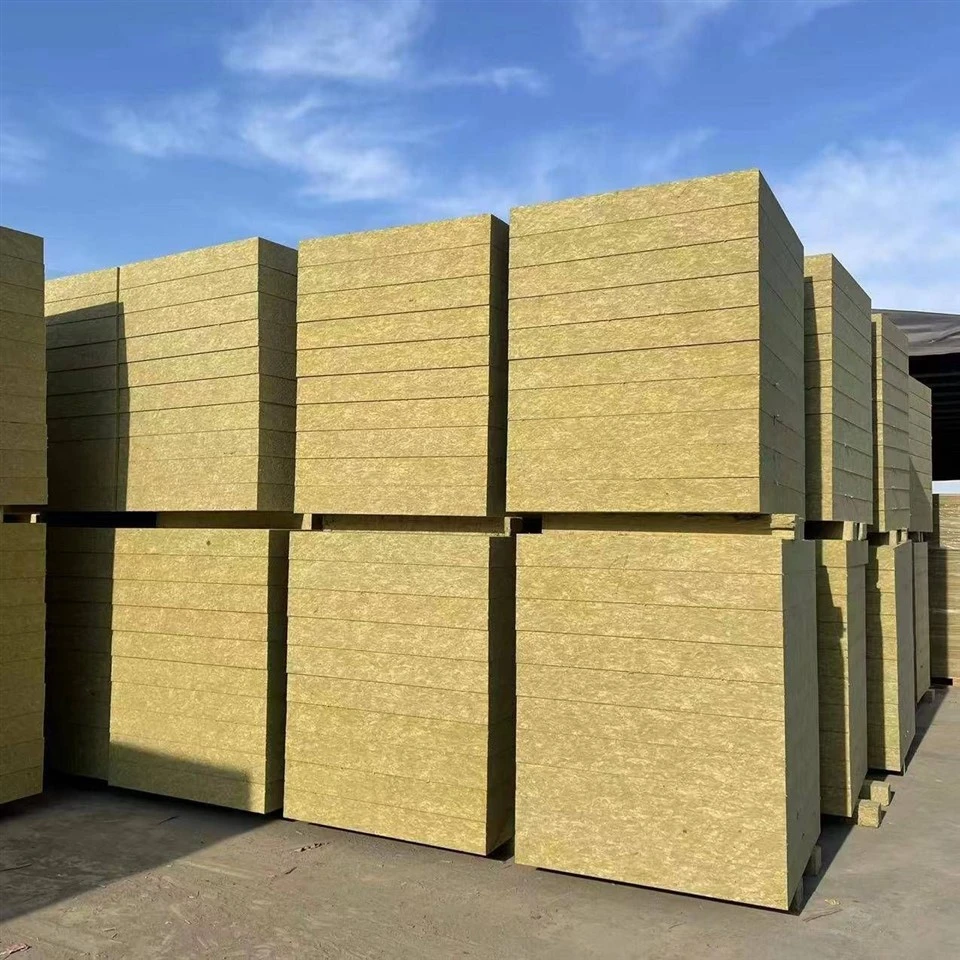
Water Repellent Rigid Glass Wool Board
Heavy duty rubber stop bumpers are precision-molded elastomeric components designed to limit mechanical travel, absorb heavy kinetic impacts, and reduce noise and vibration between dynamic and stationary assemblies.
The product consists of bonded glass fibers with a hydrophobic treatment, providing controlled thickness and density for precise cutting, fitting, and mechanical fixing.
Technical Specifications
|
Parameter |
Specification Basis / Standard Range |
|
Material |
Glass mineral wool / Fiberglass |
|
Product Form |
Rigid or semi-rigid insulation board |
|
Density Range |
48 - 96 kg/m³ (Selected based on mechanical load) |
|
Thermal Conductivity ($\lambda$) |
0.032 - 0.040 W/m·K (Grade-dependent) |
|
Thermal Resistance ($R$-Value) |
Determined by thermal conductivity and installed thickness |
|
Water Absorption |
Verified according to EN 1609 / ASTM C1104 |
|
Water-Repellent Treatment |
Hydrophobic surface and core treatment available |
|
Compressive Strength |
Tested per EN 826 / ASTM C165 (Grade-specific) |
|
Reaction to Fire |
Euroclass A1 / Non-combustible (Tested per EN 13501-1 / ASTM E84) |
|
Standard Dimensions |
1200 x 600 mm, 1200 x 1000 mm (Custom sizes available) |
|
Thickness Range |
25 - 150 mm |
|
Facing Options |
Unfaced, Aluminum Foil (FSK), Glass Tissue, or Custom |
|
Edge Configuration |
Square edge, Ship-lap, or Tongue & Groove |
|
Applicable Standards |
EN 13162 (European Projects) / ASTM C612 (North American Projects) |
Key Performance Considerations
Thermal Performance: Thermal conductivity is the primary parameter for calculating insulation thickness. Determine thickness based on declared thermal conductivity ($\lambda$) to achieve target overall U-values for the building envelope or mechanical system.
Water-Repellent Performance: Hydrophobic treatment limits water uptake during high-humidity exposure, construction-site rain delays, or occasional water contact, preserving thermal integrity without replacing weather barriers or vapor retarders.
Board Stability & Mechanical Strength: Density and thickness tolerances are maintained within tight limits for consistent handling. For high-load assemblies (such as heavy wall cladding or floor applications), compressive strength must be matched with the specific mechanical fixing method.
Fire Performance: Fire ratings should be confirmed via certified test documentation. Non-combustible mineral wool boards contribute to structural fire safety and flame-spread prevention in commercial and industrial structures.
Applications
Building Wall Insulation: Exterior curtain walls, cavity walls, and rainscreen systems requiring stable board handling, fire safety, and moisture protection.
Roof and Ceiling Systems: Flat or pitched roof assemblies needing consistent insulation thickness and straightforward mechanical attachment.
HVAC & Mechanical Piping: External duct wrapping and mechanical equipment insulation. For chilled or below-ambient systems, a continuous vapor barrier facing is required to prevent condensation.
Commercial & Industrial Facilities: Factories, warehouses, and workshops requiring durable thermal barriers combined with efficient installation.
Prefabricated Systems: Pre-cut or custom-sized boards tailored for modular construction and sandwich panel cores to minimize job-site waste.
Selection Guide
Define Thermal Requirements: Identify the target thermal resistance or U-value. Calculate required thickness using the declared thermal conductivity of the specific product grade.
Assess Moisture Exposure: Evaluate potential exposure to humidity, rain during construction, or internal HVAC condensation. Request EN 1609 or ASTM C1104 short/long-term water absorption test data if moisture risk is present.
Determine Mechanical Loads: Evaluate structural loads, fixing pressure, and compression. Select appropriate board density and compressive strength accordingly.
Verify Fire Regulations: Confirm mandatory building code classifications (e.g., Euroclass A1 or ASTM E84 Class A) prior to selecting the product grade.
Finalize Dimensional & Facing Specs: Confirm board dimensions, facing material (unfaced vs. foil-faced), and edge profiles to streamline installation.
Manufacturing & Quality Controls
Density & Thickness Monitoring: Automated inline sensors ensure consistent density across the board profile.
Hydrophobic Agent Distribution: Controlled chemical application guarantees uniform moisture repellency through the surface and core.
Dimensional Inspection: Edge squareness, length, and width are verified against ISO tolerances.
Batch Traceability: Every production lot is labeled with batch numbers linked to factory test reports.
Product Documentation & Compliance
The following technical documents are available for project submission and B2B qualification:
Technical Data Sheet (TDS) & Material Safety Data Sheet (MSDS)
Factory Test Reports (Thermal Conductivity, Water Absorption, Density)
Fire Reaction Test Certificates (EN 13501-1 / ASTM E84)
Certificate of Origin (COO) and ISO Quality System Certificates
Bulk Supply & OEM Customization
Dimensions: Custom board lengths, widths, and non-standard thicknesses.
Facings: Aluminum foil, reinforced tissue, or black glass fiber mesh.
Packaging: Palletized shrink-wrapping, reinforced export crates, and private-label packaging.
FAQ
Q: Is water repellent rigid glass wool board completely waterproof?
A: No. The hydrophobic treatment reduces water absorption from incidental moisture or rain during construction. It is not a waterproofing membrane. Complete assemblies must incorporate appropriate weather barriers and flashings.
Q: How do I select the correct board density and thickness?
A: Thickness is calculated using the required U-value and product thermal conductivity. Density should be selected based on mechanical strength demands, direct compressive load, and fixing methods.
Q: What is the difference between standard glass wool and water-repellent glass wool?
A: Water-repellent glass wool contains specialized hydrophobic additives applied during manufacturing, significantly lowering water uptake under wet or humid conditions compared to standard untreated mineral wool.
Q: Can this board be used for below-ambient HVAC ductwork?
A: Yes, provided it is specified with a continuous, sealed vapor-barrier facing (such as reinforced aluminum foil) to prevent ambient moisture from condensing on the cold pipe/duct surface.
Q: What documentation is provided for B2B procurement and compliance?
A: We provide complete technical packages including Technical Data Sheets (TDS), MSDS, Factory Test Reports (Thermal, Water Absorption, Fire), Certificates of Origin, and ISO compliance documentation for project approval.
Hot Tags: water repellent rigid glass wool board, China water repellent rigid glass wool board manufacturers, suppliers, factory


